
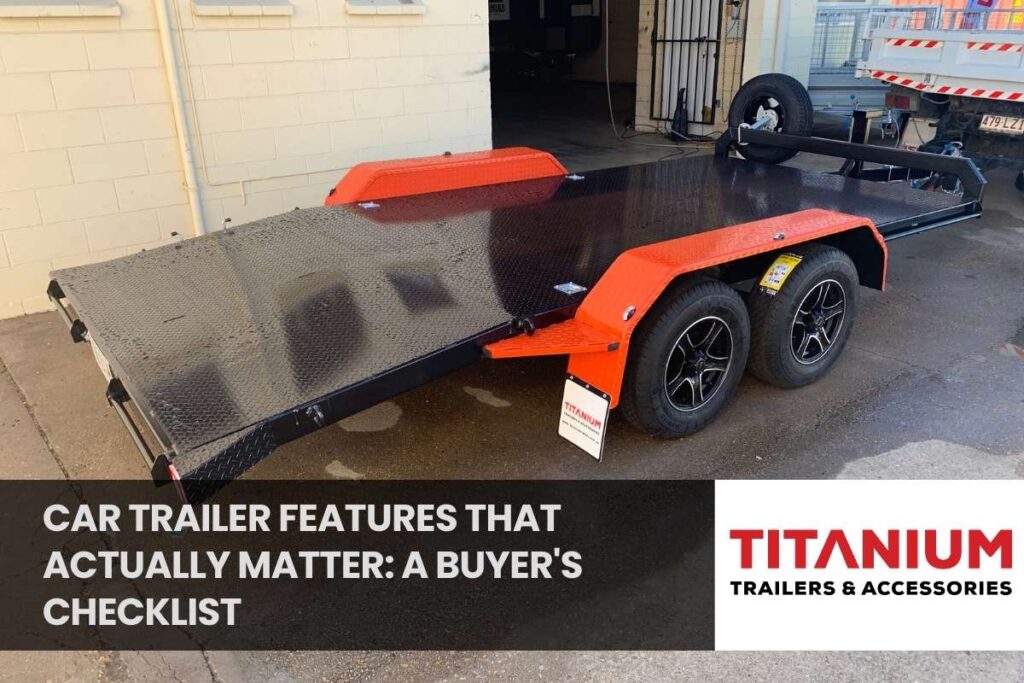
Buying a car trailer involves more than comparing prices. The features built into a trailer determine how safely it performs, how long it lasts, and whether it genuinely suits your transport needs. Many buyers focus on surface-level specifications while overlooking the construction details that matter most.
This checklist breaks down the features worth evaluating when shopping for a car trailer. Rather than listing every possible option, it focuses on what genuinely impacts performance, safety, and value for Queensland conditions.
This guide covers the essential features to evaluate before purchasing a car trailer. You’ll learn how to assess frame construction, understand load capacity requirements, compare braking systems, evaluate ramp designs, and identify the finishing details that indicate quality manufacturing. Each section includes specific questions to ask dealers and red flags to avoid.
The frame is the foundation of any car trailer. Everything else depends on structural integrity, and this is where manufacturers cut corners most often on budget models.
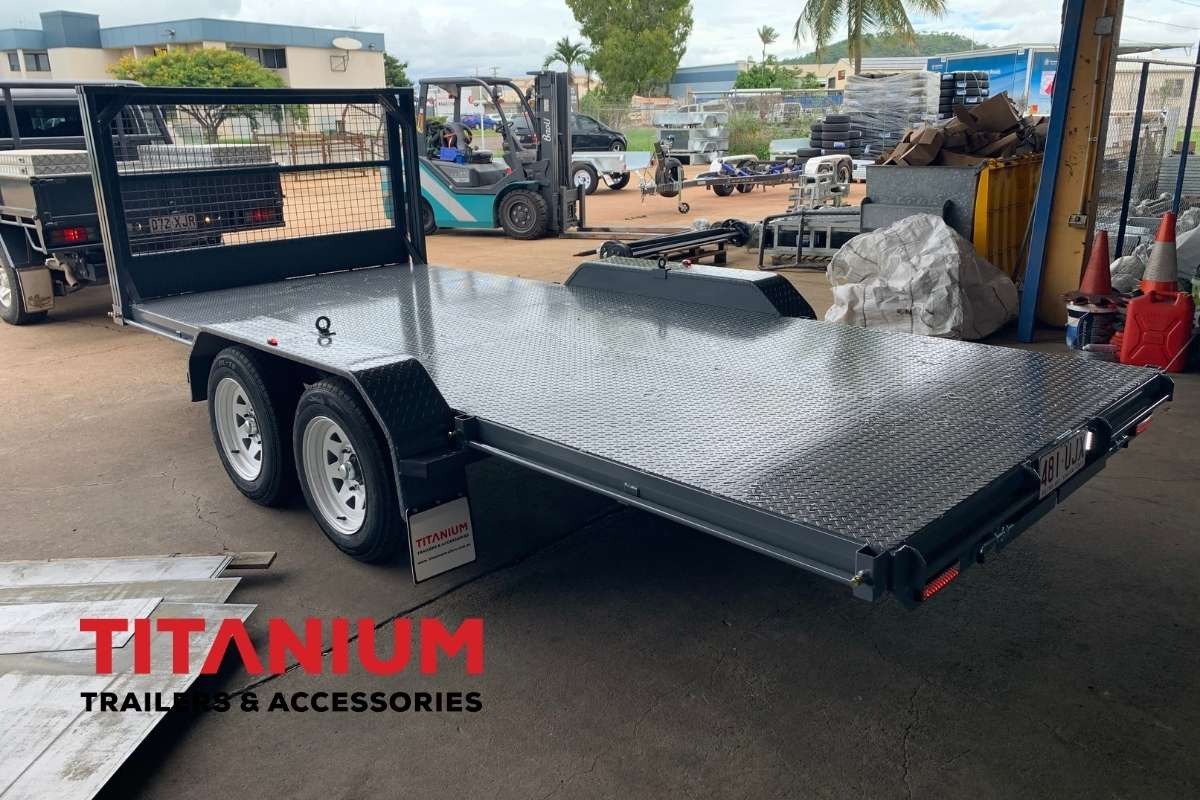
Steel thickness matters. Quality car trailers use minimum 50x50mm RHS (rectangular hollow section) steel for the main chassis rails, with crossmembers at regular intervals. Thinner steel or wider crossmember spacing reduces manufacturing costs but compromises load distribution and long-term durability.
Welding quality is visible. Inspect weld seams along the frame. Consistent, clean welds indicate proper manufacturing. Inconsistent beads, gaps, or excessive spatter suggest rushed production. Poor welds are failure points under load stress.
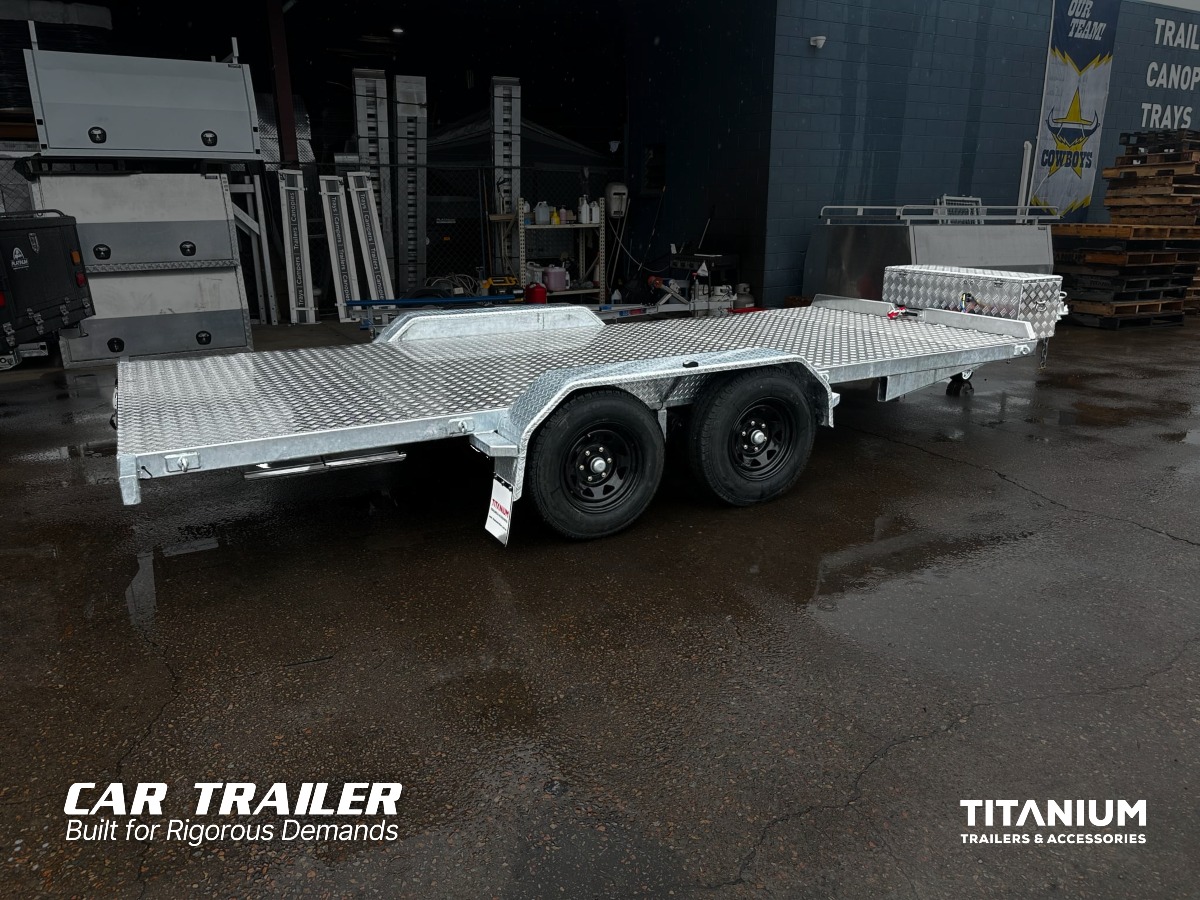
Galvanised vs painted finishes directly affect corrosion resistance. Hot-dip galvanising provides superior protection for Queensland’s coastal and humid conditions. Painted frames require ongoing maintenance and eventually rust through, particularly around weld points and areas where the paint chips.
For trailers expected to handle heavy or repeated use, choosing the right construction upfront prevents expensive problems later.
Checklist Questions:
Understanding capacity specifications prevents dangerous overloading and ensures the trailer actually fits your intended use.
ATM (Aggregate Trailer Mass) is the maximum total weight including the trailer itself plus cargo. A 2,000kg ATM trailer with 450kg tare (empty weight) provides 1,550kg actual payload capacity. Always calculate payload, not just ATM.
Tare weight is the trailer’s empty weight. Heavier construction typically indicates more robust materials, but also reduces payload capacity. Balance durability against your vehicle’s towing limits.
Deck length and width must accommodate your vehicles with clearance to spare. Measure the longest and widest vehicle you’ll transport, then add minimum 200mm each direction. Standard car trailer decks range from 4.0m to 5.0m length and 1.8m to 2.1m width.
Deck height affects stability during transport. Lower deck heights improve centre of gravity but may reduce ground clearance. Consider the terrain between your typical pickup and destination points.
Your tow vehicle’s capacity must exceed the loaded trailer weight. Review hauling capacity fundamentals before finalising specifications.
Checklist Questions:
Axle setup affects stability, weight distribution, and legal requirements. The choice between single and tandem configurations depends on intended payload and towing frequency.

Single axle trailers suit lighter loads and occasional use. They’re more manoeuvrable in tight spaces and cost less initially. However, a tyre blowout leaves you stranded, and weight capacity is limited.
Tandem axle trailers distribute weight across four wheels, improving stability and braking performance. If one tyre fails, you can carefully continue to a safe location. Tandem setups handle heavier loads and reduce tyre wear through better weight distribution.
The differences between single and dual axle configurations apply across trailer types, including car trailers.
Suspension type also matters. Leaf spring suspension handles heavy loads reliably and costs less to repair. Independent suspension provides smoother towing and better handles uneven terrain but costs more initially and to maintain.
Checklist Questions:
Australian regulations require brakes on trailers with ATM exceeding 750kg. For car trailers, this means virtually all models need compliant braking systems.
Mechanical override brakes activate when the tow vehicle slows, pushing the trailer coupling forward to engage brakes. They’re simpler and cheaper but provide less precise control, particularly on descents.
Electric brakes offer proportional braking controlled from the cabin. A brake controller in the tow vehicle lets you adjust braking force based on load and conditions. Electric systems provide superior control and reduce wear on tow vehicle brakes.
Understanding electric brake systems helps you evaluate whether the additional investment suits your towing patterns.
Breakaway systems are legally required on trailers over 2,000kg ATM. These engage trailer brakes automatically if the trailer disconnects from the tow vehicle. Quality manufacturers include breakaway systems on smaller trailers as a safety feature.
Checklist Questions:
Ramp quality directly affects loading safety and long-term usability. Poorly designed ramps cause vehicle damage, personal injury, and frustration.
Ramp length determines approach angle. Longer ramps create gentler angles, reducing risk of scraping low vehicles. Minimum 2.0m ramp length suits most sedans; lower vehicles need 2.4m or longer.
Ramp width should allow comfortable positioning without precision driving during loading. Full-width ramps are ideal; split ramps require more careful alignment but store more compactly.
Surface grip prevents wheel spin during wet loading. Expanded mesh, punched holes, or grip strips provide traction. Smooth steel surfaces become hazardous when wet.
Ramp weight affects one-person operation. Aluminium ramps weigh significantly less than steel equivalents. Spring-assist mechanisms make heavier ramps manageable. Consider who will be loading vehicles and how often.
Browse ramp options to understand available configurations.
Checklist Questions:
Proper tie-down points enable legal and safe vehicle transport. Inadequate securing causes vehicle movement, damage, and potential accidents.
Number and placement of tie-down points should allow four-corner securing at minimum. Quality trailers provide eight or more points, enabling wheel straps plus chassis tie-downs.
Rating capacity of each tie-down point must exceed the forces generated during emergency braking or evasive manoeuvres. Look for rated D-rings or recessed anchor points rather than lightweight hooks.
Wheel chock compatibility adds security during transport. Integrated chock positions or bolt-down points for removable chocks prevent vehicle rolling.
Learn proper trailer securing techniques and theft prevention alongside load securing.
Checklist Questions:
Australian Design Rules mandate specific lighting configurations for road-registered trailers. Non-compliant lighting fails registration and creates liability issues.
Required lights include tail lights, brake lights, indicators, reflectors, and number plate illumination. All must be visible from required distances and angles.
Wiring quality determines reliability. Sealed connectors, protected looms, and properly secured cabling prevent failures. Exposed wiring corrodes and fails, particularly in Queensland conditions.
Plug compatibility with your tow vehicle avoids adapter hassles. Seven-pin flat plugs are most common; round plugs and twelve-pin configurations suit vehicles with electric brake controllers.
LED vs incandescent lighting affects longevity and power draw. LED lights last longer, draw less power, and resist vibration damage better than traditional bulbs.
Checklist Questions:
The coupling connects trailer to tow vehicle and must match your vehicle’s setup while handling maximum load forces.
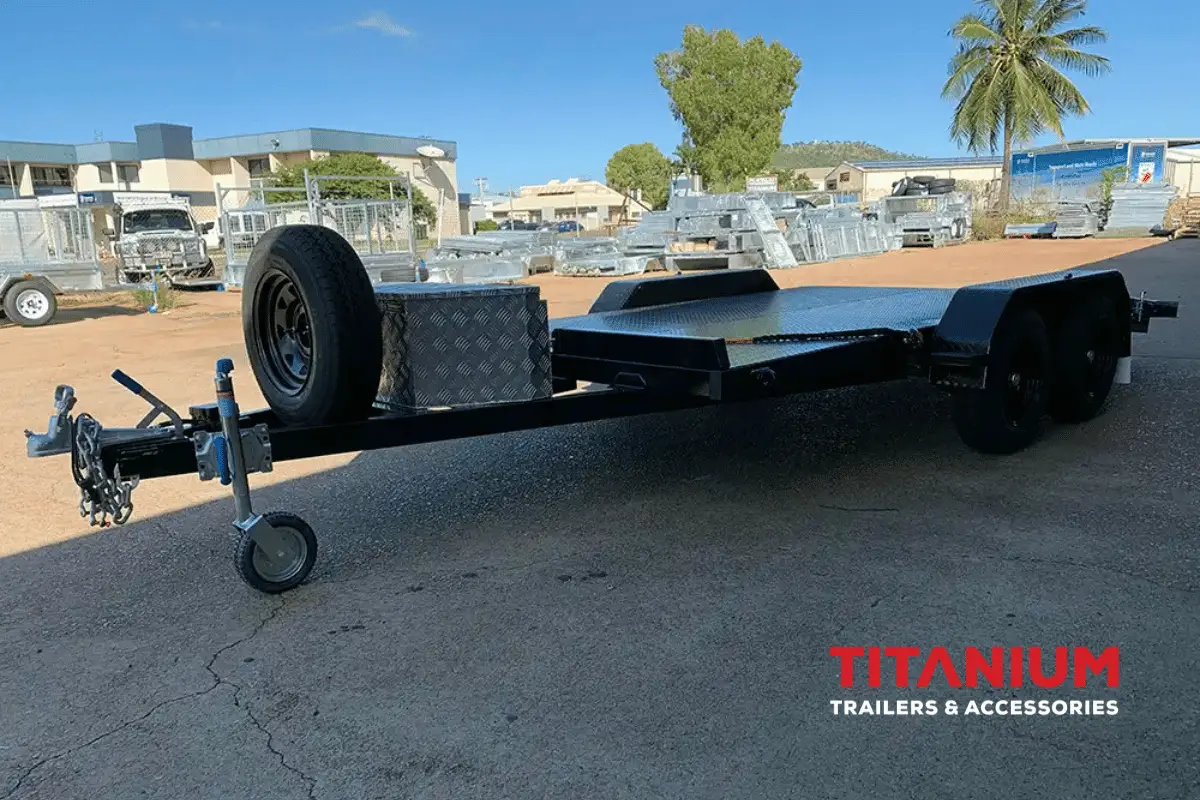
Coupling type must suit your towbar. Standard 50mm couplings suit most passenger vehicle towbars. Override couplings integrate mechanical braking. Off-road couplings provide additional articulation for uneven terrain.
Coupling rating must exceed trailer ATM. Using an underrated coupling risks failure under load or braking stress.
Jockey wheel quality affects coupling ease and stability when unhitched. Solid wheels handle paved surfaces; pneumatic wheels suit softer ground. Swivel brackets improve manoeuvrability.
Explore coupling and hitch options and jockey wheel accessories available for different setups.
Safety chains must be rated for trailer ATM and cross beneath the coupling. Quality trailers include chains rated well above minimum requirements.
Checklist Questions:
Warranty terms reveal manufacturer confidence in their product. Support availability affects long-term ownership experience.
Structural warranty should cover frame and chassis for minimum three years. Quality manufacturers offer five years or longer. Read exclusions carefully, particularly regarding commercial use.
Component warranties cover axles, brakes, couplings, and electrical separately. Understand what’s covered and for how long.
Parts availability matters when repairs are needed. Ask about common service parts and delivery timeframes to regional areas. Titanium’s parts and repair service supports ongoing maintenance.
Service network proximity affects warranty claims and maintenance convenience. Check showroom locations and service capabilities.
Checklist Questions:
The features you choose affect both initial performance and long-term durability. However, proper maintenance remains essential regardless of quality level.
Following proven car trailer maintenance practices extends working life and protects resale value. Regular inspection of brakes, bearings, lights, and structural components catches problems before they become expensive repairs.
Quality trailers require less maintenance and tolerate harsher conditions, but no trailer is maintenance-free. Factor ongoing care into ownership costs alongside purchase price.
Standard configurations suit many buyers, but specific applications benefit from tailored features. Custom builds address unique vehicle dimensions, load patterns, or usage requirements.
Common customisations include extended decks for longer vehicles, additional tie-down points, integrated toolboxes, winch mounts, and specialised ramp configurations.
Custom trailer options let you specify exact requirements rather than compromising with near-fit standard models. For business applications, tailoring trailers to specific operations often improves efficiency enough to justify additional cost.
Request a custom trailer quote to explore specifications matching your exact requirements.
What’s the most important feature to evaluate on a car trailer? Frame construction and material quality. The frame supports everything else, and compromised frames create safety issues and expensive repairs. Prioritise hot-dip galvanised steel frames with adequate thickness over surface features.
How do I know if a car trailer will fit my vehicle? Measure your vehicle’s length and width, then add minimum 200mm clearance each direction. Check deck dimensions against these measurements. For lower vehicles, verify ramp length creates an acceptable approach angle.
Are electric brakes worth the extra cost? For regular towing or heavy loads, yes. Electric brakes provide proportional control, reduce tow vehicle brake wear, and improve safety on descents. Occasional light-load towers may find mechanical brakes sufficient.
What trailer capacity do I need for a standard sedan? Most sedans weigh 1,200kg to 1,600kg. A trailer with 2,000kg ATM and approximately 1,600kg payload handles most sedans comfortably. Always verify your specific vehicle’s weight against trailer payload capacity.
How long should car trailer ramps be? Minimum 2.0m for standard vehicles; 2.4m or longer for lowered vehicles or those with front spoilers. Longer ramps create gentler approach angles and reduce scraping risk.
Do I need a tandem axle car trailer? Tandem axles suit frequent use, heavier vehicles, and those wanting redundancy if a tyre fails. Single axles work for occasional use and lighter vehicles while costing less and manoeuvring more easily.
What maintenance does a car trailer require? Regular inspection of brakes, wheel bearings, lights, tyre condition, and tie-down points. Bearing repacking annually or per manufacturer recommendations. Checking structural components for cracks or corrosion.
Can car trailers be customised to specific requirements? Yes. Reputable manufacturers offer custom builds addressing specific deck dimensions, tie-down configurations, ramp styles, and additional features. Custom builds suit unusual vehicle dimensions or specialised transport needs.
What warranty should I expect on a quality car trailer? Minimum three years on structural components; five years indicates higher manufacturer confidence. Component warranties vary. Check whether commercial use affects warranty terms.
How does financing work for trailer purchases? Many suppliers offer payment plans and finance options through lending partners. Finance options allow spreading costs while taking delivery immediately.
Use this checklist when comparing options to identify trailers built for performance and longevity rather than lowest price. Visit a Titanium Trailers showroom to inspect construction quality firsthand and discuss specifications matching your transport needs.
Quick answer: The best trailer for landscaping depends on your main load. A tipper trailer is the top all-round choice for bulk mulch, soil, sand,
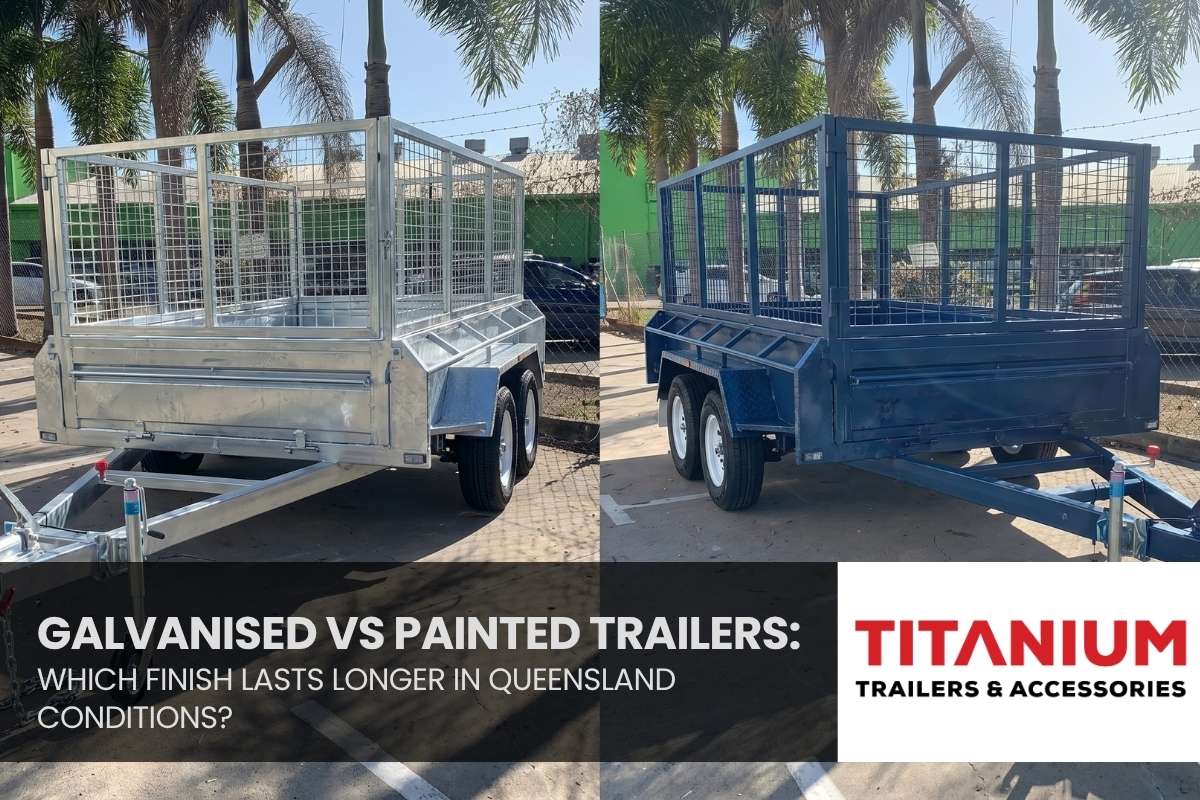
In Queensland conditions, a hot-dip galvanised trailer lasts significantly longer than a painted one. Galvanising bonds a sacrificial zinc layer to the steel that keeps