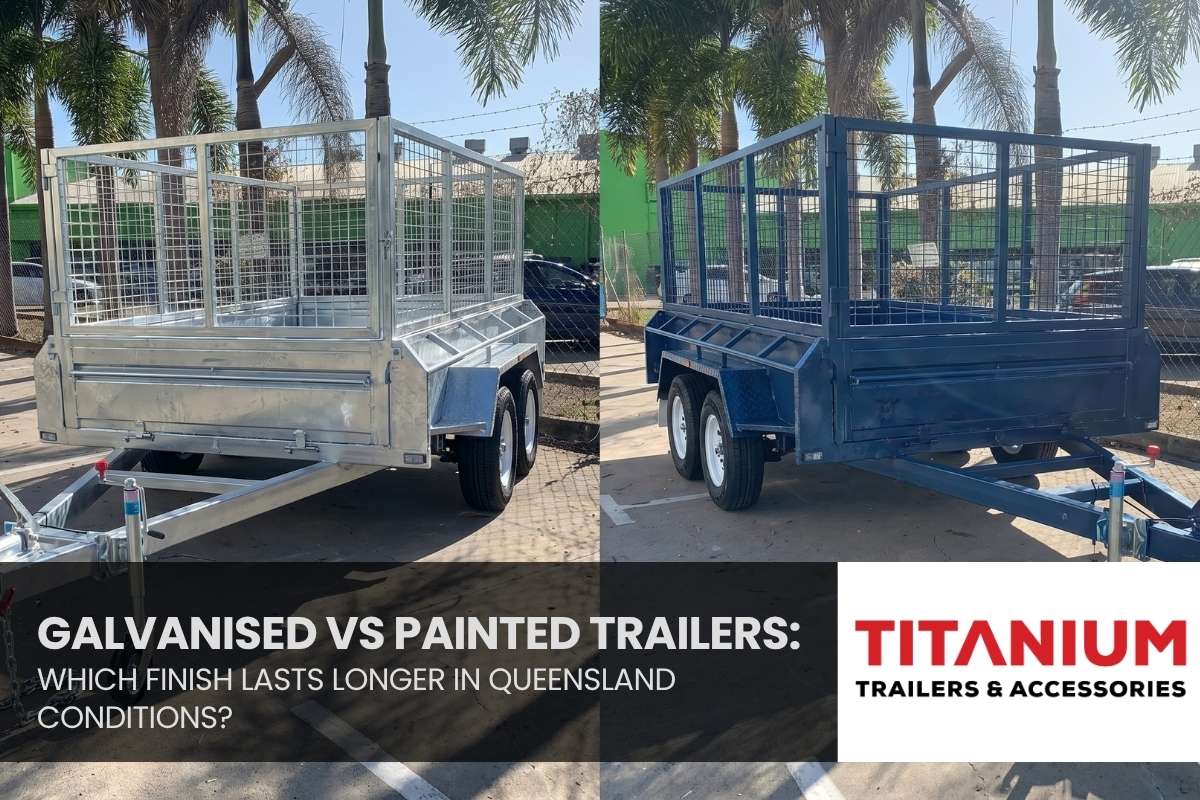


In Queensland conditions, a hot-dip galvanised trailer lasts significantly longer than a painted one. Galvanising bonds a sacrificial zinc layer to the steel that keeps protecting the metal even when scratched, while paint is only a surface barrier that lets rust spread underneath once it chips. For the salt air, humidity and UV of coastal and tropical Queensland, galvanised wins on durability nearly every time.
That difference matters more here than almost anywhere else in Australia. The choice of finish can be the single biggest factor in how many years you get out of a box trailer, boat trailer or stock crate before corrosion forces a rebuild.
This guide explains how galvanised and painted finishes actually perform against Queensland’s climate, what the corrosion data shows, how the two compare on cost and upkeep, and which finish suits your use case.
Queensland combines three corrosion accelerators: airborne salt, high humidity and intense UV. Together they make finish quality far more important than in dry inland regions.
According to AS 4312:2019, the Australian standard for atmospheric corrosivity, coastal sites are graded from C3 (medium) up to CX (extreme). Tropical “quiet” coastlines like Cairns and Townsville can rate CX within 100 metres of the shore, easing to C5 or C4 within 500 metres and C3 around the one-kilometre mark. Brisbane’s semi-sheltered coast rates up to C5 close to the water.
Those categories carry hard numbers. In a C5 environment, bare steel corrodes at 80 to 200 microns per year, and in CX it climbs to 200 to 700 microns per year. Unprotected or poorly coated steel simply does not survive long in these conditions, which is why your finish choice drives the whole equation. If you also haul heavy or wet loads, pair finish considerations with the advice in our guide to choosing a trailer for heavy loads.
Hot-dip galvanising means dipping the fabricated steel into molten zinc at around 450 degrees Celsius. The zinc reacts with the steel to form a metallurgically bonded zinc-iron alloy, not just a coating sitting on top.
This bond delivers two layers of defence. First, the zinc acts as a physical barrier. Second, and more importantly, it is sacrificial: the zinc corrodes in preference to the steel, so even a scratch or a small chip stays protected by the surrounding coating. Paint cannot do this.
Galvanising to AS/NZS 4680 also coats sharp edges, weld points and internal cavities evenly. As the Galvanizers Association of Australia notes, paint corrosion can advance unseen beneath the film, whereas zinc keeps guarding the steel until it is fully consumed.
Paint and powder coating protect steel as a barrier only. They look sharp, come in any colour, and can cost less upfront. The catch is that protection ends the moment the surface is breached.
Once a painted trailer is chipped by gravel, a load strap or a boat-ramp knock, moisture and salt creep under the film and rust spreads laterally, often hidden from view. The Tropical (T) classification was added to Australian standards specifically because high UV in northern Queensland degrades paint coatings faster than it affects the underlying steel corrosion rate.
Powder coating is a tougher, baked-on version of paint with better impact resistance, but it remains a barrier system. Near saltwater it still needs regular inspection and repair to stay ahead of corrosion.
| Factor | Hot-Dip Galvanised | Painted / Powder-Coated |
| Protection type | Sacrificial zinc bonded to steel | Surface barrier only |
| Lifespan (coastal QLD) | 20 to 40+ years to first maintenance | Touch-ups often needed within a few years |
| If scratched | Surrounding zinc still protects | Rust spreads under the film |
| Edges and welds | Even coverage in cavities and corners | Thin or missed on sharp edges |
| Upkeep | Minimal | Regular inspection and repainting |
| Appearance | Matte silver-grey | Colour choice, smoother look |
| Upfront cost | Comparable, sometimes higher | Often lower |
| Best suited to | Coastal, tropical, boat ramps, livestock | Inland, sheltered, appearance-led use |
For most Queensland buyers near the coast or in the tropics, galvanised is the smarter long-term investment. The higher upfront cost is offset by decades of low-maintenance service and a far higher resale condition.
Choose galvanised if you tow near saltwater, launch from boat ramps, run a livestock or cattle trailer, or work anywhere from the Atherton Tablelands down to the coast. The sacrificial protection earns its keep fastest in the harshest zones. A boat trailer in particular should almost always be galvanised given repeated saltwater immersion.
Painted or powder-coated can make sense for inland use well away from the coast, for sheltered storage, or where a specific colour matters more than maximum lifespan. Whatever finish you pick, good habits extend it, so follow our box trailer maintenance tips, especially a freshwater rinse after coastal trips. If you are weighing finishes alongside materials, our breakdown of aluminium vs steel ute trays is a useful companion read, and a custom build lets you specify exactly the finish your conditions demand.
Is a galvanised or painted trailer better for Queensland?
Galvanised is better for most of Queensland. Salt air, humidity and UV make corrosion aggressive, and galvanising’s sacrificial zinc keeps protecting the steel even when scratched. Painted finishes look good but rust faster once chipped, especially within a kilometre of the coast.
How long does a galvanised trailer last in coastal conditions?
In high-corrosion C4 and C5 zones, hot-dip galvanised steel typically reaches 20 to 40 years before first maintenance. Australian service records of 50 years are common, and lifespan depends on coating thickness and distance from the surf.
Why do painted trailers rust faster near the coast?
Paint is a barrier coating. Once salt, gravel or a load strap breaches it, moisture gets underneath and rust spreads, often hidden beneath the film. Tropical Queensland’s high UV also degrades paint faster than inland climates.
Are galvanised trailers more expensive?
Galvanising can add a modest amount to the upfront price, but it usually costs less over the trailer’s life because it needs little maintenance and resists corrosion for decades. Painted trailers may need repeated touch-ups near the coast.
Does hot-dip galvanising chip like paint?
No. The zinc is metallurgically bonded to the steel rather than sitting on the surface, so it resists impact and abrasion far better than paint. Minor knocks do not expose bare steel because surrounding zinc still protects the area.
Do galvanised trailers need any maintenance?
Very little. A periodic freshwater rinse after coastal or saltwater use, plus a quick visual check of welds and high-wear points, is generally enough. This is far less upkeep than the regular repainting a painted trailer needs near the sea.
Is powder coating the same as painting?
Powder coating is a tougher, baked-on finish with better impact resistance than standard paint, but it is still a barrier system. Near saltwater it can still let corrosion start once the surface is breached, so it needs ongoing inspection.
Which finish is best for a boat trailer?
Galvanised, almost always. Boat trailers face repeated saltwater immersion at the ramp, which is among the most corrosive conditions a trailer can meet. Sacrificial zinc protection is essential to get reasonable service life.
Can Titanium build a custom trailer with a galvanised finish?
Yes. You can specify finish, dimensions and accessories on a custom build to match your conditions. Reach out through our custom trailer quote page to discuss the right setup for your location and use.
Towing in coastal or tropical Queensland? Get a finish built for it. Request a custom trailer quote from Titanium Trailers and we’ll spec the right galvanised or painted build for your conditions, or visit ourshowrooms to see the difference in person.
In Queensland conditions, a hot-dip galvanised trailer lasts significantly longer than a painted one. Galvanising bonds a sacrificial zinc layer to the steel that keeps
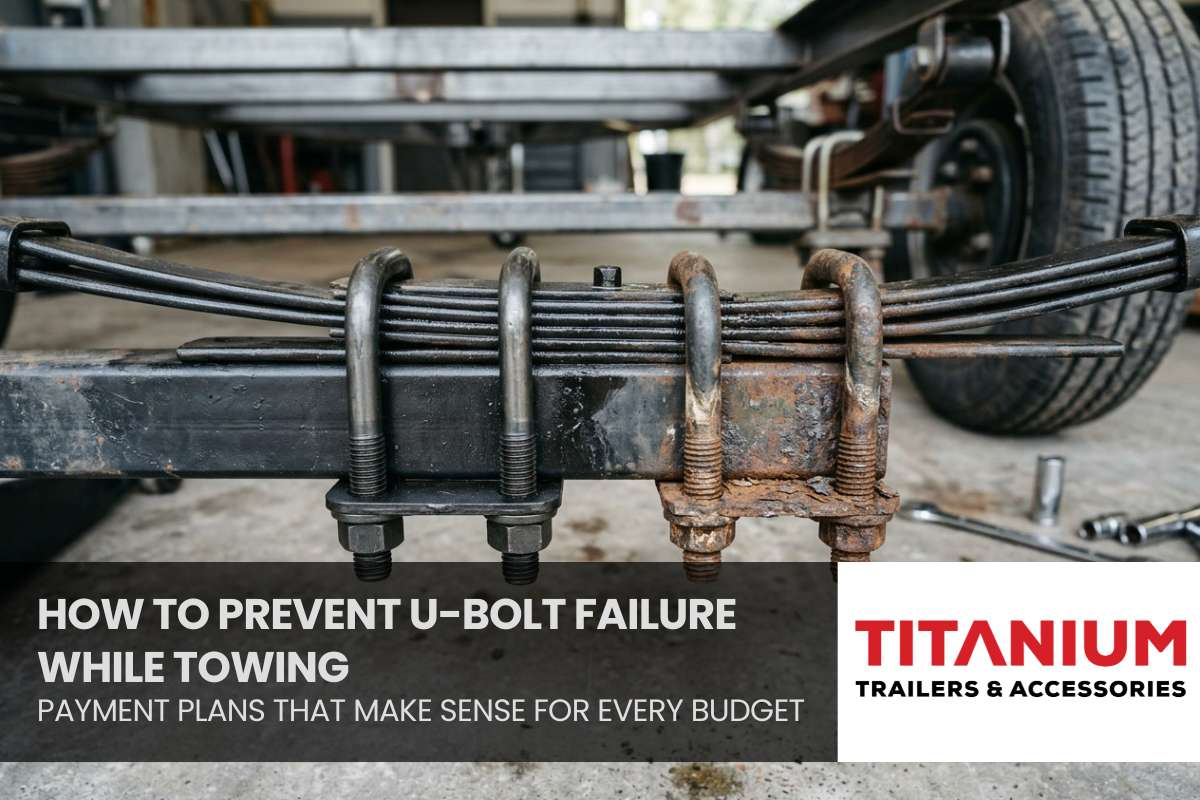
U-bolt failure is one of the most preventable causes of trailer suspension breakdown on the road. The fix is simple: inspect your U-bolts before every